
What are Harmful Algal Blooms?
Harmful algal blooms (HABs) have become an increasingly common occurrence in Cayuga Lake and many other freshwater lakes across New York and around the world. Although they are commonly called “harmful algal blooms” or “blue-green algae,” they are not actually caused by algae. Instead, they are rapid growths of cyanobacteria -photosynthetic bacteria that naturally occur in lakes, ponds, and rivers.
Under the right environmental conditions, cyanobacteria can reproduce rapidly, forming visible blooms at or near the water’s surface. Some species are capable of producing compounds known as cyanotoxins, which can be harmful to people, pets, livestock, and wildlife.
Not every bloom produces toxins, and there is no visual way to determine whether a bloom is toxic. Because of this uncertainty, it is always safest to avoid contact with any suspicious bloom.
How Do HABs Form?
Cyanobacteria are a natural part of healthy freshwater ecosystems and are usually present at low levels. Blooms occur when environmental conditions favor rapid growth.
Scientists know that several factors can contribute to HAB development including:
- Elevated nutrient levels, particularly phosphorus
- Warm water temperatures
- Calm weather and stable water conditions
- Natural lake characteristics such as water circulation and shoreline shape
- Ecological changes associated with invasive zebra and quagga mussels
These factors often work together rather than independently, making HABs difficult to predict. Two summers with similar weather may experience very different bloom activity, and blooms can develop or disappear within hours as winds and waves shift.
While there is no single solution to HABs, reducing nutrient pollution entering Cayuga Lake remains one of the most important long-term strategies for improving water quality and reducing conditions that favor blooms.
More information can be found in the Cayuga Lake HABs Action Plan.
How Can You Recognize a HAB?
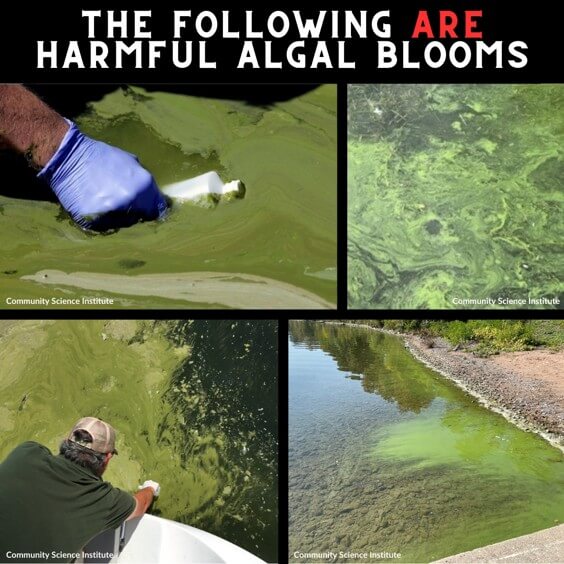
Harmful algal blooms vary tremendously in appearance. They may look like:
- Bright green or blue-green paint spilled on the water
- Pea soup
- Green streaks or swirls on the surface
- Surface scum or foam
- Murky or unusually discolored water
Some blooms also produce an unpleasant odor.
HABs Can Be Mistaken for Other Natural Conditions
Several harmless conditions are commonly confused with HABs, including:
- Tree pollen
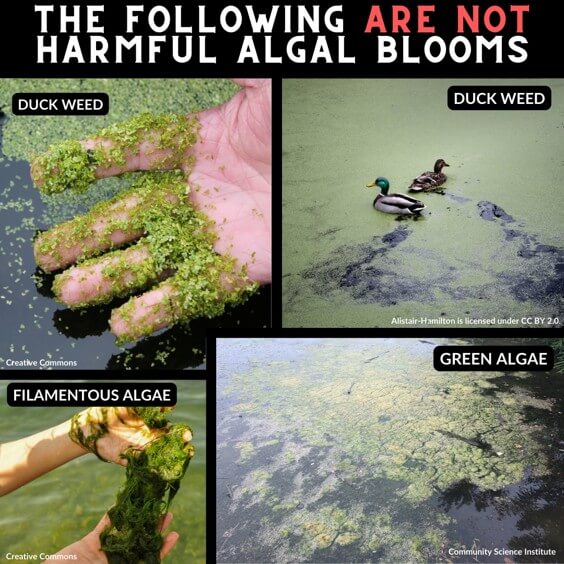
- Duckweed
- Filamentous (“string”) algae
- Floating aquatic plants
- Sediment stirred up by wind
While these look-alikes are generally not harmful, they can resemble HABs at first glance.
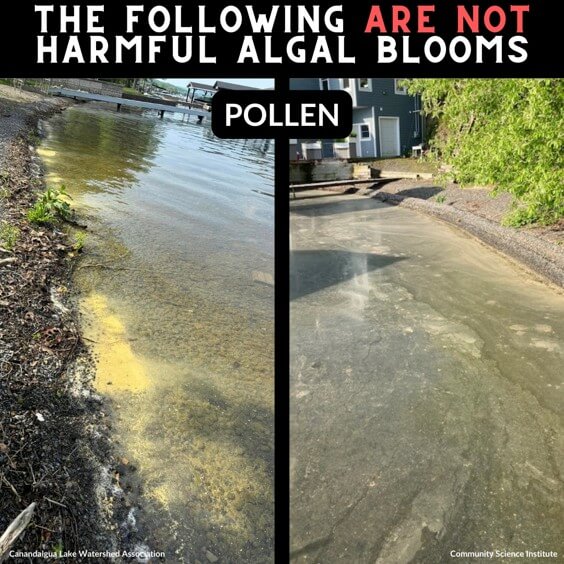
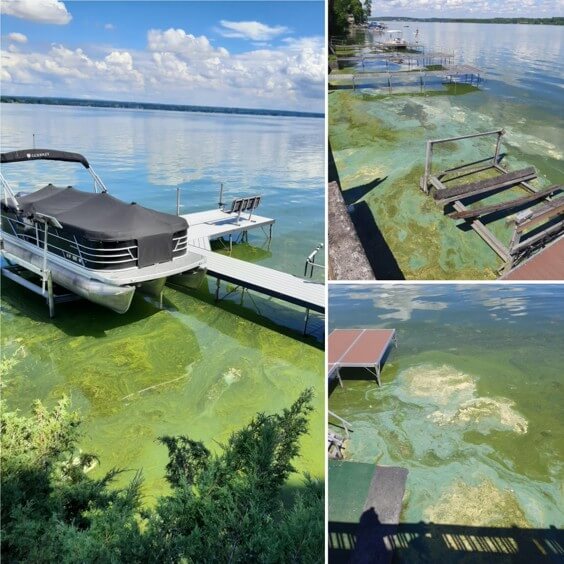
Caption: The 3 photos above were provided by the homeowner who reported the HAB to CSI on Lower Lake Road in Seneca Falls on 6/3/2024. Notice in the bottom right photo that there is pollen AND a HAB in the water. The pollen is a yellow/milky color, and the HAB is often described as “pea soup” or like frothy pea-green paint in the water.
If you are unsure what you are seeing, avoid contact with the water and report the suspected bloom. Reports are reviewed by staff who can help determine whether additional follow-up is needed.
Why Are HABs a Concern?
Some cyanobacteria produce toxins called cyanotoxins. Exposure may occur through direct skin contact, swallowing untreated lake water, or inhaling water droplets during recreational activities.
Possible symptoms include:
- Skin irritation or rash
- Eye irritation
- Sore throat
- Headache
- Nausea or vomiting
- Diarrhea
Dogs are particularly vulnerable because they are more likely to drink lake water or lick a bloom from their fur after swimming. There have been numerous documented dog deaths associated with HAB exposure in New York State.
If you or your pet comes into contact with a suspicious bloom, rinse immediately with clean tap water. If symptoms develop, contact your healthcare provider or veterinarian.
HABs and Drinking Water
Many communities around Cayuga Lake rely on the lake as their source of drinking water.
Public drinking water systems continuously monitor and treat drinking water to meet state and federal safety standards. Homeowners who draw untreated water directly from the lake should exercise additional caution during bloom events and consult their local health department for current recommendations.
Why Are HABs Becoming More Common?
Researchers have documented increases in HABs across many regions of North America over the past several decades. Scientists believe this trend is influenced by a combination of factors, including:
- Nutrient pollution in runoff from across the watershed
- Increasing water temperatures
- More frequent heavy rain events
- Changing weather patterns
- Ecological changes caused by invasive species
Because these drivers interact in complex ways, HABs remain an active area of scientific research.
What Is Being Done?
Protecting Cayuga Lake from HABs requires long-term collaboration across the entire watershed. The Cayuga Lake Watershed Network works with the Community Science Institute, New York State agencies, local governments, researchers, and hundreds of community members to:
- Monitor bloom activity throughout the summer
- Share timely public updates
- Support community reporting
- Educate lake users about HAB safety
- Advance watershed protection efforts that improve water quality over the long term
Reducing nutrient pollution, restoring streams and wetlands, improving stormwater management, supporting sustainable agricultural practices, and implementing watershed planning efforts all contribute to healthier lake conditions.
Learn More
View HAB Status & Updates for current bloom conditions.
Report a Suspected Bloom if you see something concerning.
Learn About the Cayuga Lake HABs Monitoring Program and how community science helps protect the lake.
Explore Long-Term HAB Solutions to learn how watershed protection, restoration, education, and policy all contribute to improving water quality.