Information: Cayuga Lake TMDL
On April 7, the NYS Department of Environmental Conservation (DEC) announced a proposed nutrient pollution reduction “budget” for Cayuga Lake referred to as the Total Maximum Daily Load (or TMDL) with a goal of reducing phosphorus in the lake.
On September 9th, 2024, 22 years after the Cayuga Lake Southern End segment was listed on the NYSDEC Clean Water Act 303(d) list of impaired waterbodies and 3 years since the public comment period closed, the NYS DEC finalized the Cayuga Lake Total Maximum Daily Load (TMDL) for Phosphorus, a plan created to restore the water quality of the southern end of the lake. This plan was developed in response to increasing levels of pollutants, particularly phosphorus, which have been identified as a contributor to algal blooms and other water quality issues in the lake. The TMDL is intended to provide a science-based plan to address these issues by determining the maximum amount of a pollutant, in this case phosphorus, that the lake can receive while still meeting NYS water quality standards.
Development of the TMDL Plan
The primary concern for the south end of Cayuga Lake was phosphorus pollution, which can fuel the growth of algae and cyanobacteria and threaten drinking water supplies. Algae and cyanobacteria blooms can also lead to low oxygen levels in the water, fish kills, and HABs that can release toxins harmful to human and animal health. The Cayuga Lake TMDL plan aims to establish phosphorus reduction targets for the lake’s watershed.
The NYS DEC developed our lake’s TMDL by analyzing data from water quality monitoring programs, computer models, and scientific studies. These analyses helped determine the amount of phosphorus the lake can receive while still meeting water quality standards, essentially establishing a watershed “pollution budget.” Overall, the TMDL recommends a 30% reduction in phosphorus loading across the watershed to meet water quality targets.
Implementation and Challenges
Putting the Cayuga Lake TMDL into action requires collaboration among a wide array of stakeholders, including local governments, farmers, environmental groups, and residents. Funding for these efforts often comes from federal and state grants, as well as local grassroots fundraising initiatives. However, there are challenges to achieving the phosphorus reduction goals. Non-point source pollution, particularly from agriculture, is harder to control than point sources, making community engagement and people actively choosing to adopt better practices critical. Success will depend on people working together across the watershed.
On December 11, 2024, the Cayuga Lake Watershed Network and the Cayuga Lake Watershed Intermunicipal Organization co-hosted a Community Conference session featuring presentations and a panel discussion on our watershed’s nutrient pollution challenges, the new TMDL, and ongoing water quality work. Presentation slides are available on our website under Resources > Conference Presentations. We’ll continue to share updates as the implementation progresses!
Find more information on the TMDL in our 2026 Winter/Spring Network News (pp. 13 & 15, “Cayuga Lake’s New Clean Water Plan: Understanding the TMDL” by Liz Kreitinger)
Draft TMDL – Compiled Comments
Groups across the watershed came together to review the TMDL and develop comments. The Cayuga Lake Watershed Network and the Cayuga Lake Watershed Intermunicipal Organization (CWIO) worked together under the leadership of Roxanna Johnston (Watershed Coordinator for the City of Ithaca, leader of the Cayuga Lake Monitoring Partnership) to gather a comprehensive list of comments from many stakeholders concerned with the water quality of Cayuga Lake. This resulting compiled comments document includes comments collected as of June 24, 2021.
Submitted Comments
The documents below are comment letters and resolutions regarding the draft TMDL that were submitted to NYSDEC by organizations and individuals concerned about the Cayuga Lake watershed:
- Cayuga Lake Watershed Network comments on draft TMDL
- The resolution by the Seneca County Board of Supervisors in support of a well-reasoned and scientifically supported plan to reduce phosphorus is linked for your information.
- City of Ithaca, Division of Water and Sewer comments on draft TMDL
- Special Joint Committee of Municipal Owners of the Ithaca Area Wastewater Treatment Facility comments on draft TMDL
- Community Science Institute comments on draft TMDL
- Tompkins County Water Resources Council comments on draft TMDL
- Cayuga Lake Monitoring Partnership comments on draft TMDL
- Cayuga County Health Department comments on draft TMDL
- Comments from Robert Howarth and Roxanne Marino of the Cornell Department of Ecology and Evolutionary Biology
- Tompkins County Department of Planning and Sustainability comments on draft TMDL
Have questions?
Contact us or reach out to NYSDEC Division of Water FLX
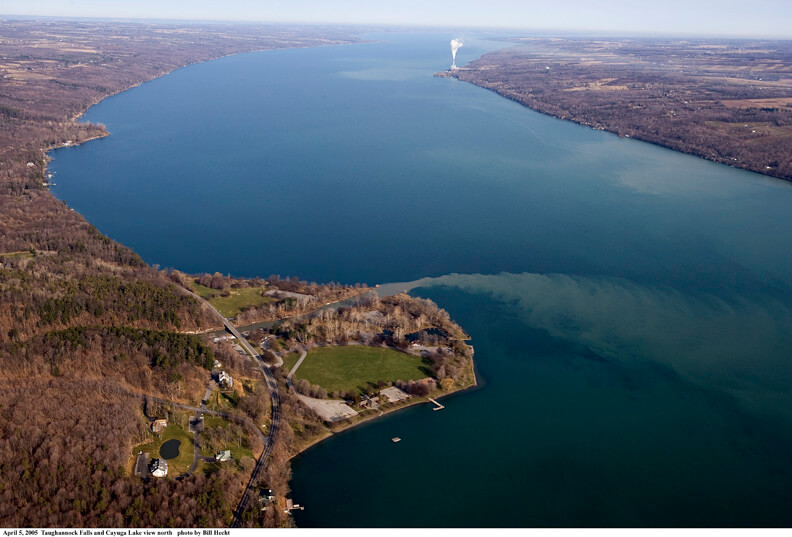
Sediment outflow at Taughannock Point. Photo by Bill Hecht.
View the full NYSDEC document here: Total Maximum Daily Load (TMDL) for Phosphorus in Cayuga Lake
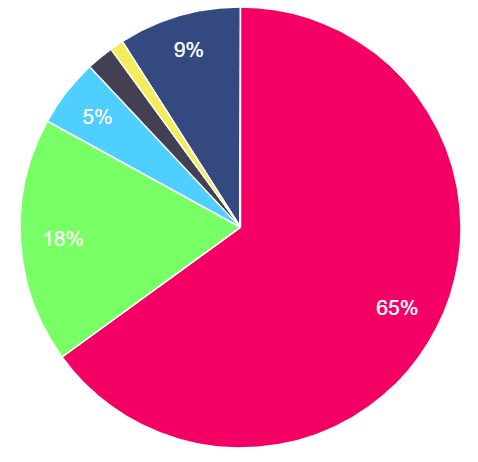
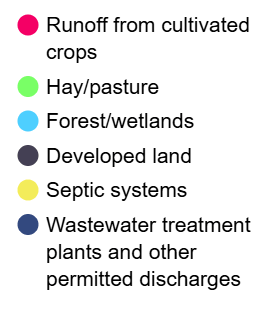
Phosphorus Sources in our Watershed